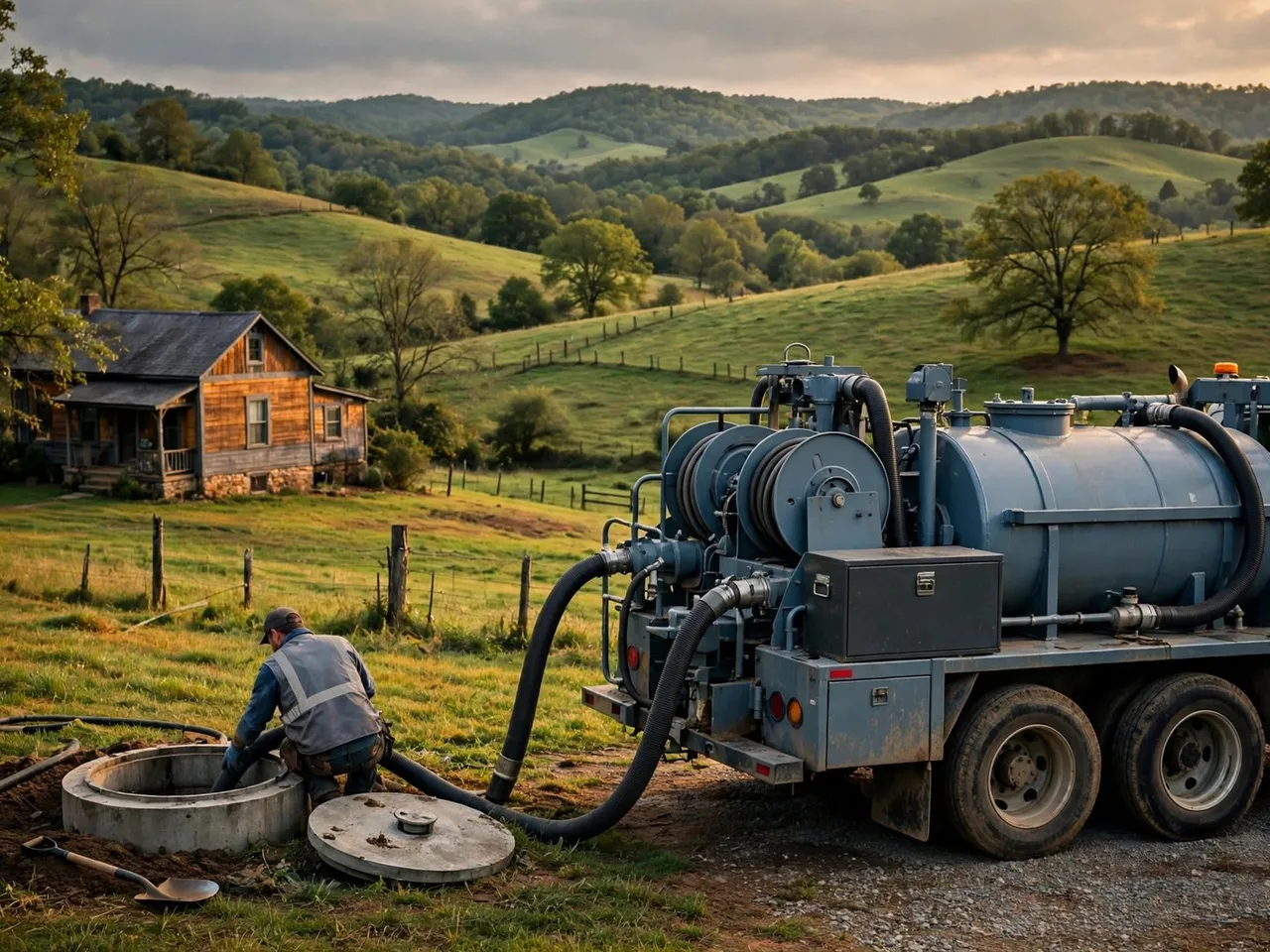
Pumping is the cheapest maintenance a septic system gets, and in Knoxville it is also one of the most predictable costs. As guidance only, never a quote, pumping in the Knoxville area typically runs $280–$520, with a full range of $190–$890. A pump-out combined with an inspection typically runs $300–$600. Those figures come from East Tennessee 2026 ranges covering Knox, Sevier, Blount, and Hamilton counties, cross-checked against Knoxville directory estimates. They are typical local ranges, not prices: no Knoxville company publishes a fixed price list, and the price for your tank depends on the tank, the access, and what the provider finds.
What sets the price
The biggest variable is access. If the lid is exposed and the truck can reach it, the job is quick. If the lid is buried, digging it up is usually extra, and that can add a meaningful amount to the bill. Tank size matters too: a 1,500-gallon tank holds more than a 1,000-gallon tank, and a larger household fills either one faster. A few local sources also show individual verified jobs in Knoxville between $325 and $600, including one at $375 for pumping plus $40 for digging, which sits comfortably inside the typical range.
One figure to be careful with: some directories quote a small tank at $100–$200 and a 1,500–2,000 gallon tank at $200–$300. Those numbers conflict with the $280–$520 typical range from the same sources, so treat them as unreliable. The $280–$520 range is the one to plan around, and the only price that matters in the end is the one the provider confirms before the visit. Get that price in writing, with digging included or excluded in plain terms, and ask whether the visit includes a check of the baffles and a note on the tank's condition. A pumping visit that only empties the tank and leaves is cheaper on the day and more expensive over the life of the system, because the condition check is what catches a failing baffle before it becomes a failed drainfield.
What a pumping visit includes
A routine visit covers locating and accessing the tank lid, pumping out the tank contents, and checking the sludge and scum levels. The provider usually checks the baffles where they are accessible and notes the tank's condition for you. A routine pumping usually takes under an hour once the lid is exposed; if the lid is buried and needs digging up, allow more time.
In Knox County, septic tank pumpers need an annual permit from the Health Department, so the person doing the work is a permitted professional. Ask for a firm price before the work, including whether digging is included, and keep the receipt: if you sell the house, a record of regular pumping is one of the first things a buyer asks about.
When your tank is due
As a general guide, most tanks need pumping every 3–5 years. The Knox County Health Department gives the same guide, with one refinement: pump every 3–5 years with ordinary use, and every 2–3 years if the house uses a garbage disposal. A two-person household with a 1,500-gallon tank can go longer than a five-person household with a 1,000-gallon tank, and in Knox County, where most septic homes sit on large lots outside the KUB sewer area — Gibbs, Corryton, Mascot, Strawberry Plains, and the east and northeast fringe of Knoxville itself — a pumping schedule is the cheapest maintenance a system gets. Our guide to how often a septic tank should be pumped in Knoxville covers the interval in more detail.
The signs a tank is due are slow drains, sewage smells near the tank or drainfield, wet or unusually green areas over the drainfield, and sewage backing up into the house. By the time sewage is backing up, the system is already overdue.
What pumping will not fix
Pumping empties the tank. It does not repair a drainfield. If solids have already carried over and clogged the soil, the field needs repair or replacement, and that is a different bill entirely: drainfield replacement in East Tennessee typically runs $5,000–$15,000 for a conventional field or $15,000–$30,000 for a mound field. Knox County sits on karst, limestone with shallow bedrock in places, so where the soil is too thin for a conventional field, a lot needs a mound system instead. A pumping schedule exists to prevent that bill, not to pay it.
If an inspection is due at the same time, combine the two visits: a pump-out with an inspection typically runs $300–$600, and pumping first lets the inspector see the tank's condition properly. And if you are buying a house, a pumping done before closing, with the receipt kept, answers the first question a buyer asks.
Not sure when your tank was last pumped? Ask about septic tank pumping in Knoxville — a local septic professional will get in touch, usually within an hour between 7am and 8pm Eastern.
Septic Tank Pumping in Knoxville, TN